
Can Therapy in West Covina Help You Set Better Boundaries?
Most people think boundaries are about saying no more often. About being tougher. But therapists see it differently — and if you're still feeling drained, overcommitted, or resentful, there's a reason. Boundaries aren't just about keeping people out. They're about deciding what gets in. And if you've never learned how to do that cleanly, individual therapy can teach you.

Here's what matters. If you're walking around exhausted because you can't turn down requests, that's not kindness. That's a pattern. And patterns don't fix themselves. Every boundary you don't set costs you something — time, energy, clarity. Online therapy gives you the tools to recognize where those costs add up and how to stop paying them.
When You Don't Know Where You End and Others Begin
Boundaries aren't about walls. They're about definition. Most of us never got a manual on how to protect our own space without guilt or backlash. So we overextend. We agree when we mean no. We absorb other people's emotions like it's our job. And over time, that becomes the norm.
Therapists help you map out where those blurred lines exist. They don't just tell you to "be more assertive." They walk you through why you struggle in the first place — whether it's childhood conditioning, fear of conflict, or a belief that your needs don't count. Once you see the pattern, you can start changing it.
What Good Therapy Actually Does
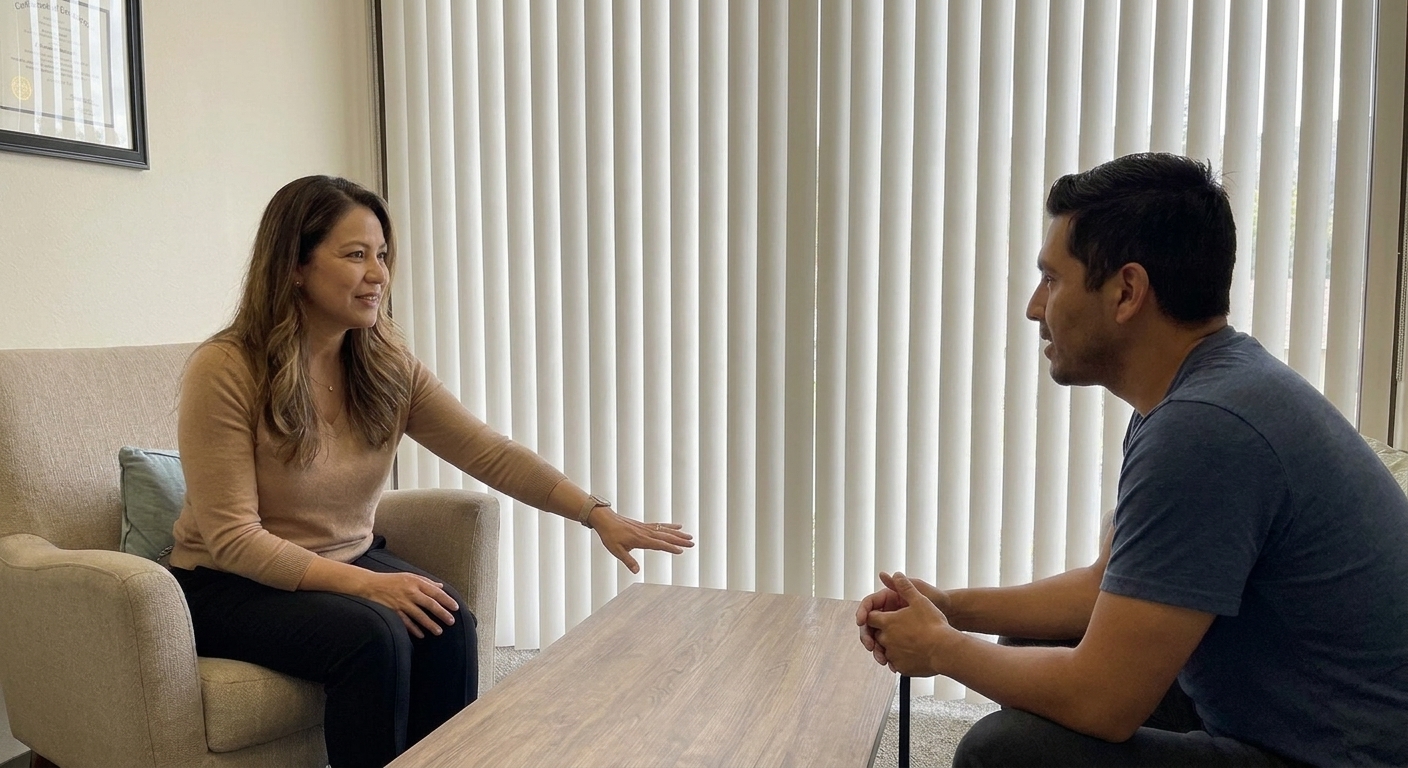
Therapy isn't vague self-help talk. It's structured work. A trained clinical staff member will help you pinpoint exactly where boundaries break down and what's driving that behavior. Then they'll help you rebuild with intention.
Here's what that looks like in practice:
- You learn to identify when someone's crossing a line — even when it feels subtle
- You get clear on what you actually want and need, not just what keeps the peace
- You practice saying no without over-explaining or apologizing
- You unpack the guilt that shows up when you prioritize yourself
- You build scripts and strategies for real-world situations that used to trip you up
The Communication Part Is Where Most People Stall
Setting a boundary in your head is one thing. Saying it out loud is another. Most people freeze up because they don't want to hurt feelings or start conflict. So they hint. They soften. They hope the other person just figures it out. They don't.
Therapists teach you how to communicate boundaries clearly and calmly. Not aggressively. Not passively. Just directly. You learn how to say what you mean without turning it into a confrontation. And you practice it — in session, with feedback — so when the moment comes, you're ready.
It's Not Just About Other People
We spend a lot of time thinking about boundaries with bosses, family members, and friends. But what about the boundaries we don't set with ourselves? The ones where we push too hard, ignore our own limits, or beat ourselves up for needing rest.
Therapy addresses that too. You learn how to treat yourself with the same respect you're trying to demand from others. That means recognizing when you're running on empty and actually doing something about it. It means letting go of perfectionism and the belief that rest is earned. Internal boundaries matter just as much as external ones.
Why West Covina Therapists Get Results
Location matters less than approach, but finding a therapist who understands boundary work specifically makes a difference. In West Covina, you'll find licensed professionals trained in cognitive-behavioral techniques, assertiveness coaching, and trauma-informed care — all of which intersect with boundary development.
Here's what sets effective therapy apart:
- They don't just validate your feelings — they help you change the behaviors keeping you stuck
- They customize the work to your actual life, not generic advice
- They hold you accountable without judgment
- They help you track progress so you know what's working
- They prepare you for pushback, because not everyone will like your new boundaries
What Happens When Boundaries Start to Stick
Once you start enforcing limits, things shift. You stop feeling resentful because you're no longer overcommitted. You have more energy because you're not leaking it into situations that drain you. Relationships get clearer because people know where they stand with you.
Some relationships improve. Some don't survive. That's part of the process. Healthy boundaries filter out dynamics that only worked when you were saying yes to everything. And while that can feel uncomfortable at first, it's also freeing.
How to Know You're Ready for This Work
If you're reading this and something feels familiar, that's your sign. You don't need to be in crisis to benefit from therapy. You just need to be tired of the same patterns playing out over and over.
Here's when it makes sense to reach out:
- You feel guilty every time you say no
- You're constantly overwhelmed but can't pinpoint why
- You avoid conflict even when it costs you
- You resent people for things you never told them bothered you
- You don't know what your own needs are anymore
Finding Someone Who Gets It
Not every therapist specializes in boundary work, so it's worth asking up front. Look for professionals with experience in assertiveness training, relational patterns, or cognitive-behavioral therapy. Many therapists in West Covina offer initial consultations where you can get a feel for their approach.
Don't settle for someone who doesn't click. Therapy works best when you trust the person guiding you. Ask questions. Be honest about what you're struggling with. The right therapist won't make you feel judged — they'll make you feel understood.
What It Costs to Keep Avoiding This
Skipping therapy doesn't mean the problem goes away. It means you keep paying for weak boundaries in other ways — burnout, strained relationships, chronic stress, lost opportunities. The longer you wait, the deeper those patterns get.
Therapy isn't about fixing everything overnight. It's about building skills that compound over time. The earlier you start, the sooner you stop giving away pieces of yourself that you can't afford to lose.
This Work Pays Off Long After the Sessions End
Learning to set boundaries doesn't just solve today's problems. It changes how you show up in every future interaction. You stop second-guessing yourself. You stop tolerating what doesn't serve you. You start living with more intention and less exhaustion.
Professional services give you the framework to make that shift. The rest is practice. And every time you hold a boundary that used to crumble, you're reinforcing a new normal — one where your needs actually matter.
Ready to Build Stronger Boundaries Together?
We know how tough it can be to break old patterns and start putting yourself first. If you're ready to experience the relief and clarity that come with healthy boundaries, let's take the next step together. Call us at 424-261-9444 or contact us to connect with a therapist who truly understands this work and can help you move forward with confidence.
‹ Back
Recent Posts
-

Can Therapy in West Covina Help You Set Better Boundaries?
November 9, 2026
-

Is Now a Good Time for Anxiety Counseling in Sherman Oaks?
September 28, 2026
-

Can Child Therapy in Sherman Oaks Help With School Stress?
September 14, 2026
-

-

Can Counseling in Pasadena Help With Social Anxiety?
August 17, 2026